

From Banking to Inspiring Kids With Coding and Robotics: Felicia Chua’s Journey with Empire Code
Skoolopedia Founder Feature: A conversation with Felicia Chua, Co-Founder of Kids Robotics and Coding School Empire Code, about transforming tech fear into digital confidence for the next generation.
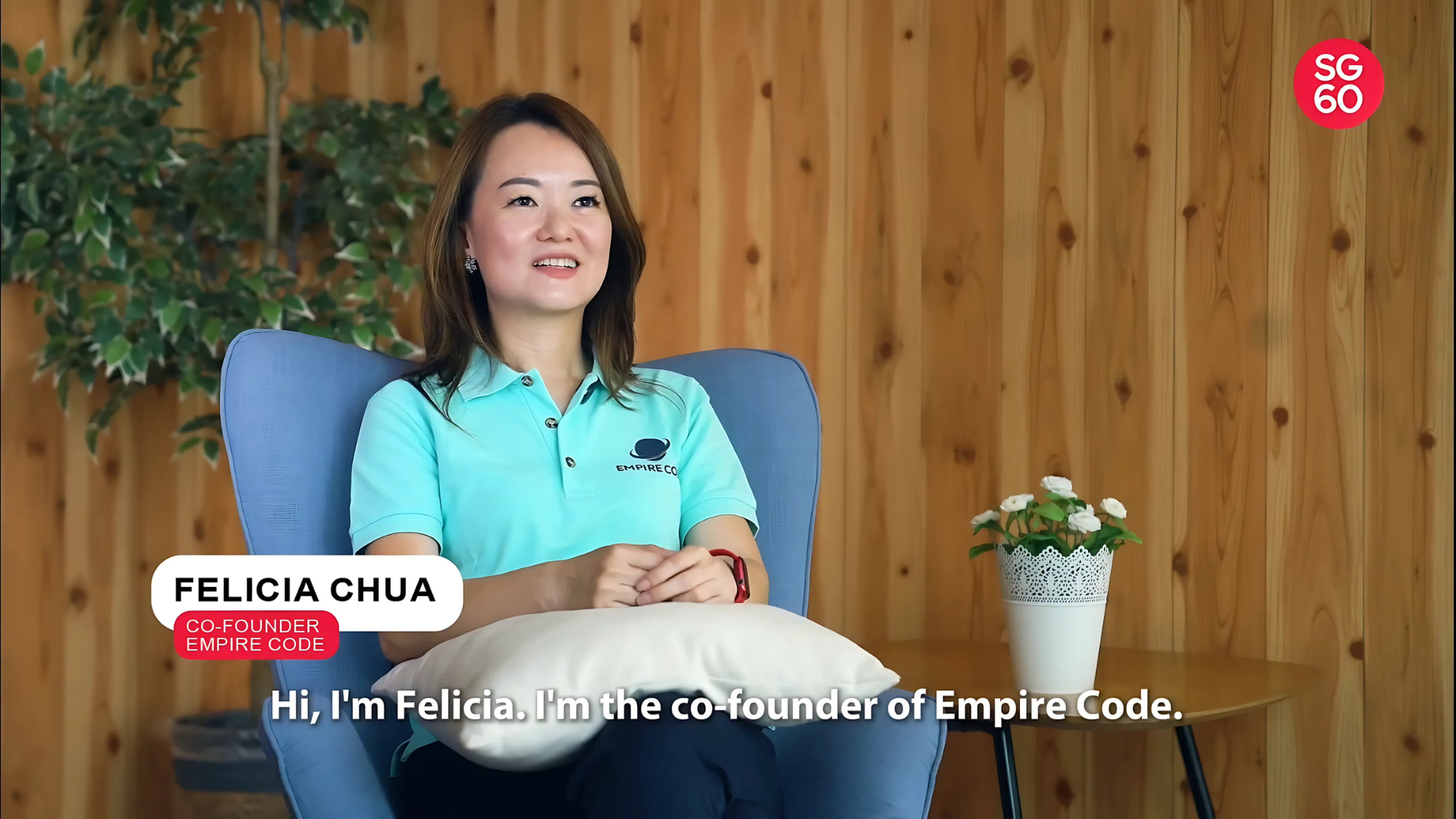
About Felicia and Empire Code
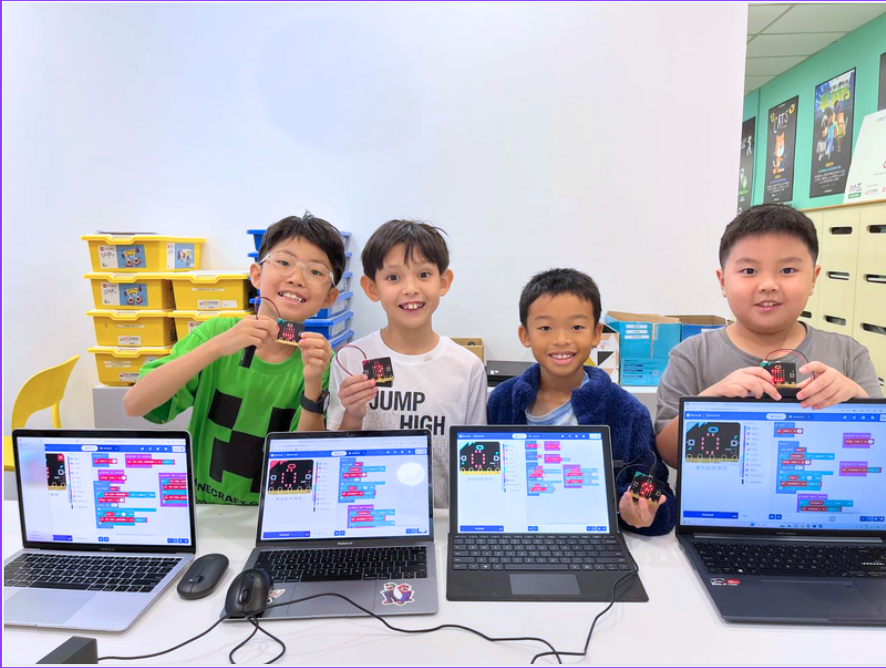
Felicia Chua is the Co-Founder of Empire Code, a top-rated robotics and coding school that has been nurturing young minds since 2016. Originally launched as Coding Garage and rebranded to Empire Code in 2018, the centre now runs two campuses at Novena and River Valley. Each campus has its own focus: Novena specialises in Direct School Admission preparation and applications, while River Valley serves as an international school, specialising in coding, robotics and game design. Across both campuses, Empire Code offers personalised, beginner-friendly coding classes, hands-on robotics workshops, and STEM enrichment programmes designed for children aged 4 and above.
What sets Felicia apart is her unconventional journey into tech education. After spending years in banking and finance, working with prestigious institutions like Credit Suisse and Royal Bank of Scotland across Singapore and London, she made a bold career pivot driven by a deeply personal realisation about technology’s role in our children’s future.
The Journey: From Tech Dinosaur to Tech Education For Young Minds
Could you share a bit about your personal journey in education and what led you to start this centre?
Felicia’s story begins with an admission that might surprise many parents: “After many years in banking and finance, I realised I had become a complete tech dinosaur – I didn’t even dare to update my iPhone’s iOS for four years!”
This experience was transformative. Having worked in environments where “you’re quite pampered” and “a lot of things are done for you,” Felicia found herself paralysed by basic technology updates. The fear was real, and it lasted for years.
“That experience made me see how important it is for children to grow up confident with technology, instead of fearful of it like I was,” she reflects. But technology wasn’t her only passion. Education had always been close to her heart, influenced by her mother who spent her entire career as an MOE teacher, and her own experience giving tuition to underprivileged students since junior college.
The opportunity came through a friend she had met in London during her banking days. When approached with the idea of starting a coding school in Singapore, “it felt like the most natural path – one where I could merge my passion for education with the urgent need to prepare kids for the digital future.”
The transition wasn’t without its challenges. Felicia candidly admits she had to learn coding herself, picking up Python and HTML. In fact, she eventually taught HTML to university computer science lecturers in Laos as part of a Microsoft and ASEAN Foundation programme that reached nearly 46,000 rural students across nine ASEAN cities.
Weathering the Storm: COVID-19 Challenges
What challenges did you face in the early days, and how did you overcome them?
Whilst Empire Code had been growing steadily since 2016, the COVID-19 pandemic presented unprecedented challenges. “The number of students basically plunged 90%,” Felicia recalls. “Parents were already dealing with their children’s school classes moving online, and they didn’t want additional Zoom-based sessions due to concerns about screen time and eyesight.”
The initial months were particularly difficult. During the three-month lockdown, followed by an additional month of restrictions on enrichment centres, the team had to completely reimagine their approach.
The breakthrough came during school holidays when travel restrictions were still in place. “There were no travel options, so parents were looking for engaging activities for their children,” Felicia explains. Empire Code quickly pivoted to offer online holiday camps, with some students signing up for three different camps within four weeks. To meet ongoing demand, the centre also introduced regular classes that fit school schedules for children.
The centre’s innovation during this period was remarkable. They adapted their curriculum for online delivery and even launched online birthday parties using Minecraft, where birthday guests could join virtually to learn coding whilst celebrating together. “We taught them how to code ‘Happy Birthday, Esther’ in the Minecraft world,” Felicia shares, demonstrating the creative solutions that emerged from necessity.
The key to their survival was maintaining their core philosophy of personalised learning. “Our format has always been customised and personalised for every child, so it was almost literally one-to-one for every single student doing online classes with us.”
Defining Success Beyond Test Scores
How do you define success for your students—and how do you help them achieve it?
For Felicia and Empire Code, success transcends traditional academic metrics. “Coding really teaches how to break down a big problem into small chunks and tackle it one by one,” she explains. This problem-solving approach has tangible benefits across subjects.
One parent shared feedback that particularly resonated with Felicia: a Primary 5 student’s maths grades improved after starting coding classes, with no other changes in her academic routine. “The parent directly attributed it to the coding classes because we integrate maths and science projects into our coding curriculum.”
Empire Code’s curriculum includes specific modules that integrate Primary 4 and 5 maths concepts using Scratch programming, teaching students to calculate areas of rectangles and triangles through code. “We integrate concepts like how hot air expands and cold air contracts into our projects,” Felicia adds.
But perhaps most importantly, success is measured by long-term engagement and confidence building. The centre has students who have been with them for years – one boy started at age 7 and is now in secondary four, still returning to learn new modules and participate in competitions.
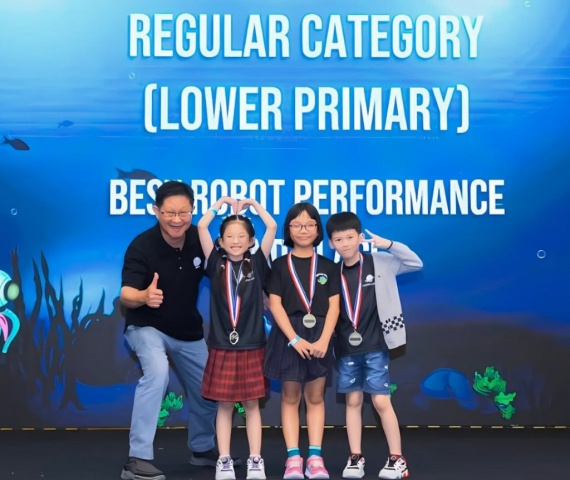
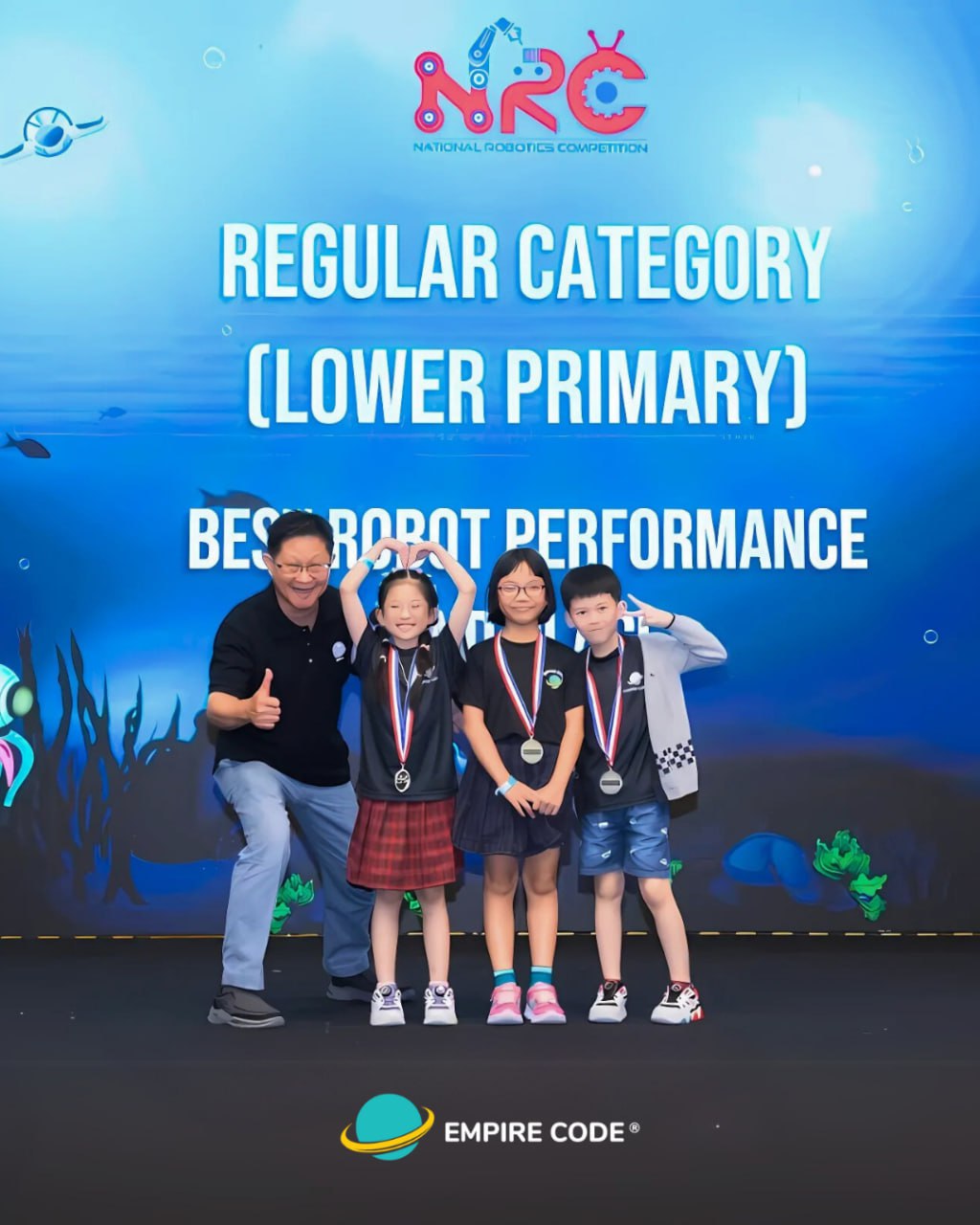
“We don’t restrict students from competitions. Every single student, if they are interested, gets the chance to take part,” Felicia emphasises. This inclusive approach to enrolling a child into a coding or robotics competition training programme helps build soft skills like teamwork, presentation abilities, and communication skills that extend far beyond coding.
Addressing Parent Misconceptions
What are some misconceptions parents often have when choosing enrichment programmes?
One of the most pressing concerns Felicia encounters today relates to artificial intelligence. “Parents ask: ‘Now with ChatGPT, you don’t have to be able to code. Why should I let my kids learn coding?'”
Her response is nuanced and practical. Whilst Empire Code embraces AI as a learning tool – students even use ChatGPT to correct their competition code – Felicia believes foundational knowledge remains crucial. “You can use ChatGPT to generate code, but you still need a basic level of knowledge to identify when ChatGPT is giving you incorrect information.”
She shares an example from a friend who specialises in AI: “To debug code generated by ChatGPT might take her a whole week, whereas coding it herself would take just two days and make debugging easier.”
The centre’s approach is to position AI as an enhancement tool rather than a replacement for creativity and fundamental understanding. “AI should be a way to enhance your learning and technical skills, rather than replace your creativity.”
Another misconception Felicia addresses is the idea that coding is separate from traditional academic subjects. “Most curricula might be fairly similar across centres, but the difference is in the teachers, environment, and how accessible it is for children to participate in competitions and develop soft skills.”
The Future of Enrichment Education
How do you see enrichment education evolving in the next 5 years?
Felicia envisages a future where enrichment education becomes more integrated and collaborative. Empire Code’s innovative partnerships demonstrate this evolution in action.
They’ve collaborated with Sakae Sushi for workshops combining Minecraft design with hands-on sushi making, with Edith Patisserie for cake design and decoration workshops, and with creative writing schools for 3D virtual storytelling using Minecraft.
“We have another collaboration with a Creative English Writing School where students write stories and then use Minecraft to visualise them for BBC Earth competitions,” she explains. These cross-disciplinary approaches reflect a broader trend towards holistic learning experiences.
The centre has also partnered with the National Heritage Board for Minecraft championship competitions where participants built heritage buildings around the Telok Ayer area, which were then used for Racial Harmony Day education. “We try to tap on different themes and make learning relevant to real-world applications.”
Looking ahead, Felicia sees enrichment education becoming more personalised and technology-integrated whilst maintaining focus on creativity and human connection. “Technology can be very adaptable. The key is making workshops fun for both kids and trainers whilst solving real-world problems.”
Empire Code’s expansion plans include bringing their programmes to more communities across Singapore and the region, with particular interest in Malaysia where Felicia’s roots lie. However, expansion will maintain their core principle: finding the right partners who can deliver personalised, engaging experiences rather than scaling at the expense of quality.
Advice for Parents Navigating Today’s Education Options
If you could give one piece of advice to a parent navigating today’s education options, what would it be?
Felicia’s advice is refreshingly practical: “Find one that your child is really comfortable with. Always sign up for trial classes, look at the environment, check out the teachers, and understand how accessible it is for your child to participate in competitions and develop soft skills.”
Her emphasis goes beyond curriculum content. “Most curricula might be fairly similar, but the difference is in the teachers and environment.” She encourages parents to look for programmes that offer competition opportunities, as these experiences build crucial soft skills like teamwork, problem-solving, and communication.
The underlying philosophy at Empire Code reflects this advice: “We care about your child as a whole person, not just as a student. Every child is unique, with their own strengths, interests, and areas to grow, and we honour that in the way we teach.”
This holistic approach explains why many students stay with Empire Code for years. “Many of our kids stay with us not just for the skills they gain, but because they feel supported, included, and inspired to keep learning.”
The Empire Code Difference
What makes Empire Code unique isn’t just their curriculum or technology platforms – it’s their commitment to personalised learning journeys. From their early days at Tanglin Shopping Centre to their current two locations in Novena and River Valley, they’ve maintained individualised learning approaches because, as Felicia puts it, “I don’t believe that one-size-fits-all would be suitable for every single child.”
Their use of game-based learning platforms like Minecraft Education and Roblox coding stems from a fundamental belief that education should be relatable and enjoyable. “If kids find it boring and don’t enjoy it, they might become hesitant to learn any form of technology skills in the future. That’s something I want to prevent.”
The centre’s success stories reflect this philosophy. Students don’t just learn to code – they gain admission to prestigious schools like the NUS High, SJI, NJC, School of Science and Technology through DSA applications, guided by the credible teaching staff at Empire Code, participate in national coding and robotics competitions, and develop the confidence to continue learning even after achieving their academic goals.
Looking Forward
Empire Code’s vision extends beyond being just a tech education centre. “We want to be a place where kids grow up confident, creative, and ready for the future,” Felicia explains. As technology evolves, they’re expanding their curriculum to include more AI, robotics, and real-world applications that prepare students not just for direct school admissions, but for life.
The centre’s commitment to social impact remains strong, with ongoing plans to help underprivileged students access technology education. Felicia has personally taught in Cambodia, Laos, and Malaysia, working with NGOs and charities to extend digital literacy to underserved communities.
For parents seeking an enrichment programme that truly understands the balance between technological advancement and human development, Empire Code offers a compelling model. It’s a place where former banking professionals can become passionate educators, where students stay for years rather than terms, and where the goal isn’t just to teach coding, but to build the confident, creative thinkers our digital future needs.
In Felicia’s words: “We want every child to discover the joy of creating with technology.” In an age where technology can feel overwhelming, that mission feels both ambitious and essential.

Give your Opinions