

Moving to Singapore as an expat family is an exciting chapter, but one question tends to overshadow the excitement almost immediately: where will my child go to school? Singapore’s education landscape is genuinely impressive — the city-state consistently ranks among the world’s top performers in international assessments — yet for a newcomer, the range of school types, admission rules, and fee structures can feel overwhelming. Local government schools, international schools, private institutions, and a thriving ecosystem of preschools and enrichment centres all compete for your attention, each with its own entry requirements and cultural expectations.
This guide is designed specifically for expat parents who are new to Singapore or are planning their move and want a clear, honest picture of how the system works. We cover the difference between local and international schools, what it actually takes for a foreign child to enrol, what you can expect to pay, and how to find quality preschools, enrichment centres, and student-care facilities near your home or planned neighbourhood. Whether your child is two years old or thirteen, you will find practical, up-to-date information here to help you make a confident decision.
Understanding the Singapore School System
Singapore’s education system is structured in stages that will feel broadly familiar to parents from most Western countries, though the rigour and pace can be surprising at first. The journey typically begins with preschool (ages 18 months to 6 years), moves into primary school (ages 6 to 12), then secondary school (ages 13 to 16 or 17), and finally post-secondary pathways such as junior colleges, polytechnics, or the Institute of Technical Education. The Ministry of Education (MOE) oversees government and government-aided schools, while international and private schools operate under different regulatory frameworks, primarily through the Committee for Private Education (CPE).
What makes Singapore distinctive is how seriously academic achievement is taken at every level. The Primary School Leaving Examination (PSLE) at the end of Primary 6 is a defining milestone that shapes a child’s secondary school placement. For expat children who may join mid-way through this journey, understanding where a particular school sits in the broader structure matters enormously. The good news is that the system is transparent and well-documented, and resources like Skoolopedia are specifically built to help parents cut through the complexity.
Local Schools vs. International Schools: Which Is Right for Your Child?
This is the fork-in-the-road question every expat family faces, and there is no universally correct answer. The right choice depends on how long you plan to stay in Singapore, your child’s current academic foundation, your family’s language background, and your longer-term education goals.
Local government schools follow the MOE curriculum, teach primarily in English with a strong emphasis on Mother Tongue languages (Mandarin, Malay, or Tamil), and are significantly more affordable. They offer an immersive experience in Singaporean culture and the opportunity for your child to build deep friendships with local peers. However, the curriculum is demanding and moves quickly; a child entering Primary 3 without a solid grounding in Singapore-style mathematics and literacy may find the adjustment challenging.
International schools cater explicitly to the globally mobile population. Most offer internationally recognised curricula such as the International Baccalaureate (IB), the British A-Levels and IGCSEs, the American High School Diploma, or the Australian curriculum. They tend to have more flexible admission timelines, dedicated support for English-language learners, and pastoral teams experienced with the emotional challenges of relocation. The trade-off is cost: fees can range from S$20,000 to over S$50,000 per year.
Families planning to stay in Singapore for three years or fewer often favour international schools for the curriculum continuity they provide. Families on longer assignments or those considering permanent residency sometimes choose local schools, particularly at the primary level, to give children the full Singapore experience and a stronger shot at local university admissions later on.
Can Expat Children Attend Local Government Schools?
Yes, foreign children can attend MOE schools, but they are classified as international students and face a different admission process to Singapore Citizens and Permanent Residents. Places for international students are limited at every level, and admission is not guaranteed. Foreign children must sit the Admissions Exercise for International Students (AEIS), a centralised test held annually in September and October that assesses English and Mathematics. There is also a supplementary exercise (S-AEIS) in February and March for students who missed the main exercise or were unsuccessful.
It is important to note that international students in government schools pay higher school fees than citizens or PRs. At the primary level, fees for international students are capped by MOE but are still meaningfully higher than what local families pay. At the secondary level, the gap widens further. Despite the additional cost, many expat parents pursue this route because the academic standard is exceptional and the cultural immersion is unmatched.
One practical tip: if your child is joining a local school, research the school’s cut-off points for secondary school placement early. Skoolopedia’s directory includes secondary school cut-off point data that can help you gauge the level of academic competition your child will be entering and plan enrichment support accordingly.
International Schools in Singapore: What You Need to Know
Singapore has a well-developed international school sector with more than 80 registered international schools serving families from virtually every nationality. The most prominent are concentrated in districts such as Buona Vista, Holland Village, Novena, Pasir Ris, and Woodlands, though many are accessible from across the island via bus or school transport.
Popular Curriculum Choices
- International Baccalaureate (IB): Offered at three levels — Primary Years Programme (PYP), Middle Years Programme (MYP), and the Diploma Programme (DP). Widely respected globally and strong preparation for universities worldwide.
- British curriculum (IGCSE / A-Levels): Familiar to families from the UK, Commonwealth countries, and many parts of Asia. Several well-established British schools operate in Singapore.
- American curriculum: Follows a K-12 structure leading to an American High School Diploma, with SAT preparation built in. Popular with families from the US and those targeting American universities.
- Australian curriculum: Less common but available, and a good fit for Australian families or those with trans-Tasman ties.
- French, German, Japanese, and other national curricula: Singapore hosts full national schools for several countries, catering to their diplomatic and corporate expatriate communities.
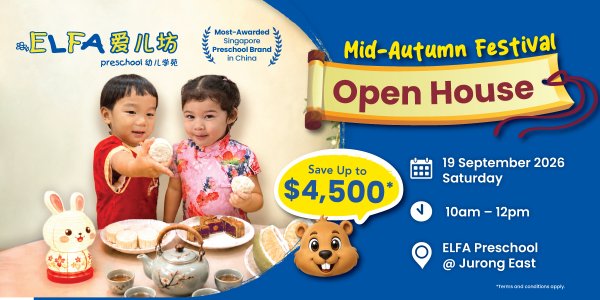
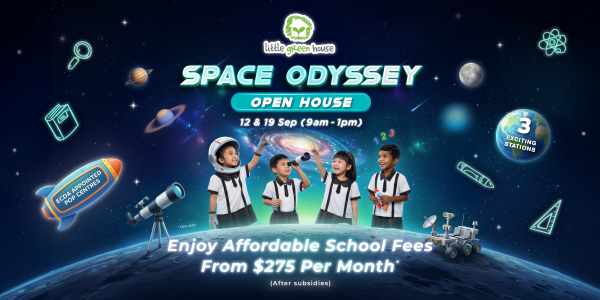
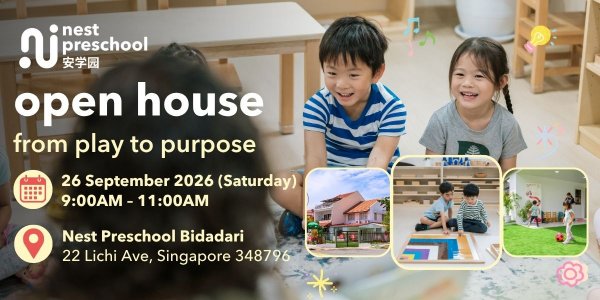
When evaluating international schools, look beyond the curriculum brand. Ask about class sizes, the ratio of experienced teachers to students, support services for learning differences, co-curricular activities, and — critically — the school’s track record in university placements. Many international schools in Singapore hold open houses throughout the year, and attending one before committing is strongly recommended.
Preschool and Early Childhood Education for Expat Families
For families with younger children, the preschool decision is often the first and most immediate challenge after arriving in Singapore. The early childhood sector here is diverse, ranging from government-affiliated childcare centres run by anchor operators such as NTUC First Campus and PCF Sparkletots, to private preschools, Montessori schools, and the early childhood programmes of international schools.
Foreign children are welcome at virtually all private and international preschools, and most anchor operators accept non-citizens as well, though subsidy eligibility differs. If you are looking for a preschool close to your home or your planned MRT station, Skoolopedia’s searchable directory of preschools near MRT stations is one of the most practical tools available. You can filter by location, see programme details, read parent reviews, and even check current vacancies, which saves considerable legwork during a busy relocation period.
One consideration worth flagging early: the best preschools in Singapore, particularly those affiliated with popular primary schools or with strong IB-aligned curricula, can have waiting lists of six months to a year or more. If you know which neighbourhood you will be settling in, begin researching and applying as soon as possible, ideally before you arrive.
Enrichment Centres and Student Care: Filling the Gaps
One dimension of Singapore’s education culture that surprises many expat parents is the prevalence and importance of enrichment activities outside school hours. Singapore families invest heavily in tuition, music lessons, sports coaching, coding classes, creative arts, and a host of other supplementary programmes. For expat children, enrichment activities serve a dual purpose: they build academic confidence in an unfamiliar curriculum and they provide social entry points into Singaporean peer groups outside the school gate.
If your child is joining a local school and needs support catching up with the MOE syllabus — particularly in Mathematics or Mother Tongue — a good enrichment centre can make a meaningful difference. Skoolopedia’s directory of enrichment centres near MRT stations covers hundreds of providers across subjects and age groups, making it straightforward to find quality options in your neighbourhood.
Student care centres are another practical consideration for working expat parents. These after-school programmes supervise primary school children from around 2 pm until parents finish work, often including homework supervision, meals, and recreational activities. They are regulated, affordable, and widely available near most primary schools. You can explore options through Skoolopedia’s student care centres near MRT stations directory to find a reliable option close to your child’s school or your home.
School Fees and Financial Planning
Budgeting for education is one of the most significant financial considerations in any Singapore relocation package. Here is a broad overview of what to expect across the main school categories:
- MOE primary schools (international students): Approximately S$370 to S$550 per month, depending on nationality and school tier.
- MOE secondary schools (international students): Approximately S$650 to S$950 per month.
- Private international schools: Annual fees typically range from S$20,000 to S$55,000, with some elite schools exceeding this. Registration fees, development levies, and school bus costs add to the total.
- Private preschools: Monthly fees range widely, from around S$800 for a basic programme to S$3,000 or more for premium international preschools.
- Enrichment and tuition: Group classes average S$200 to S$600 per month per subject; one-on-one tuition can run significantly higher.
Many multinational employers offer education allowances as part of expat packages, and these are worth negotiating carefully. If your employer covers school fees, clarify whether the allowance is capped, whether it covers only tuition or also ancillary costs, and what happens if you need to switch schools mid-year.
Registering Your Child: A Step-by-Step Overview
The registration process differs between local and international schools, but the following steps apply broadly to most situations expat families will encounter.
- Determine your child’s age and appropriate school level – Singapore follows a January-to-December academic year, which may differ from your home country. Confirm the correct year group with the school before applying.
- Shortlist schools based on curriculum, location, and budget – Use resources like Skoolopedia and the MOE website to build a realistic shortlist. Attend open houses where possible.
- Prepare documentation – Standard requirements include your child’s birth certificate, passport, immunisation records, previous school reports, and proof of residence in Singapore (such as a tenancy agreement). Some schools also require recommendation letters or conduct interviews.
- Sit the AEIS (for MOE schools) – Foreign children applying to government primary or secondary schools must register for and sit the AEIS during the relevant window. Results are released within a few weeks.
- Accept the placement and complete enrolment – Once an offer is received, there is usually a short window to accept and pay the registration deposit. Do not delay, as places can be withdrawn.
- Arrange logistics – School uniforms, bus passes, textbooks, and canteen cards all need to be sorted before the first day. Schools provide checklists, but starting early reduces stress.
Tips for a Smooth School Transition in Singapore
Beyond the paperwork and fees, the human side of transitioning into a new school system deserves attention. Children who move internationally experience a genuine period of cultural and academic adjustment, and parents who acknowledge this openly tend to navigate it better than those who expect an immediate, seamless fit.
- Visit the school before the first day if the school permits it. Familiarity with the physical environment reduces first-day anxiety considerably.
- Connect with expat parent communities through school parent-teacher associations, Facebook groups, or platforms like InterNations and ExpatLiving Singapore. These communities are invaluable sources of practical, on-the-ground advice.
- Do not over-schedule enrichment immediately. Give your child at least a month to settle into the school routine before adding after-school activities. Singapore’s enrichment culture is excellent, but the pressure to fill every slot can backfire during a transition period.
- Monitor language adjustment closely, particularly if your child is entering a local school where Singlish and code-switching between English and Mother Tongue languages are common. A little patience and some informal conversation practice goes a long way.
- Trust the teachers. Singapore’s teaching workforce is rigorously trained and professionally proud. Build a relationship with your child’s class teacher early, communicate openly about your family’s context, and you will find most educators go out of their way to support new arrivals.
Singapore is, in many respects, one of the most welcoming countries in the world for expat families navigating education. The infrastructure is excellent, the schools are safe, and the academic outcomes are world-class. With the right preparation and the right resources, finding the best fit for your child is entirely achievable.
Your Singapore School Journey Starts Here
Choosing the right school for your child in a new country is one of the most consequential decisions you will make during your time in Singapore, and it deserves careful, well-informed thought. From understanding the difference between MOE and international school pathways, to budgeting accurately for fees, to finding quality preschools and enrichment support close to your home, every piece of this puzzle matters. The good news is that Singapore’s education ecosystem is robust, transparent, and genuinely designed to help children thrive. Take the time to visit schools, speak with other expat parents, and use the practical tools available to you. Your child’s successful and happy education in Singapore is well within reach.
Find the Right School, Enrichment Centre, or Student Care Near You
Skoolopedia is Singapore’s most trusted parent education portal, with a searchable directory of preschools, enrichment centres, and student care facilities you can filter by MRT station or neighbourhood. Explore parent reviews, check current vacancies, and browse open-house listings — all in one place.
Give your Opinions